Brain and cognition
NAD and the brain: measuring NAD+
A brain scan and a memory test ask wonderfully different questions. The NR studies become much more interesting when both answers stay visible.
The brain measurement
I expected the blood results to be the straightforward part of this story. The more ambitious step was measuring NAD+ in the brain in NADPARK. Blood alone could never locate that change.
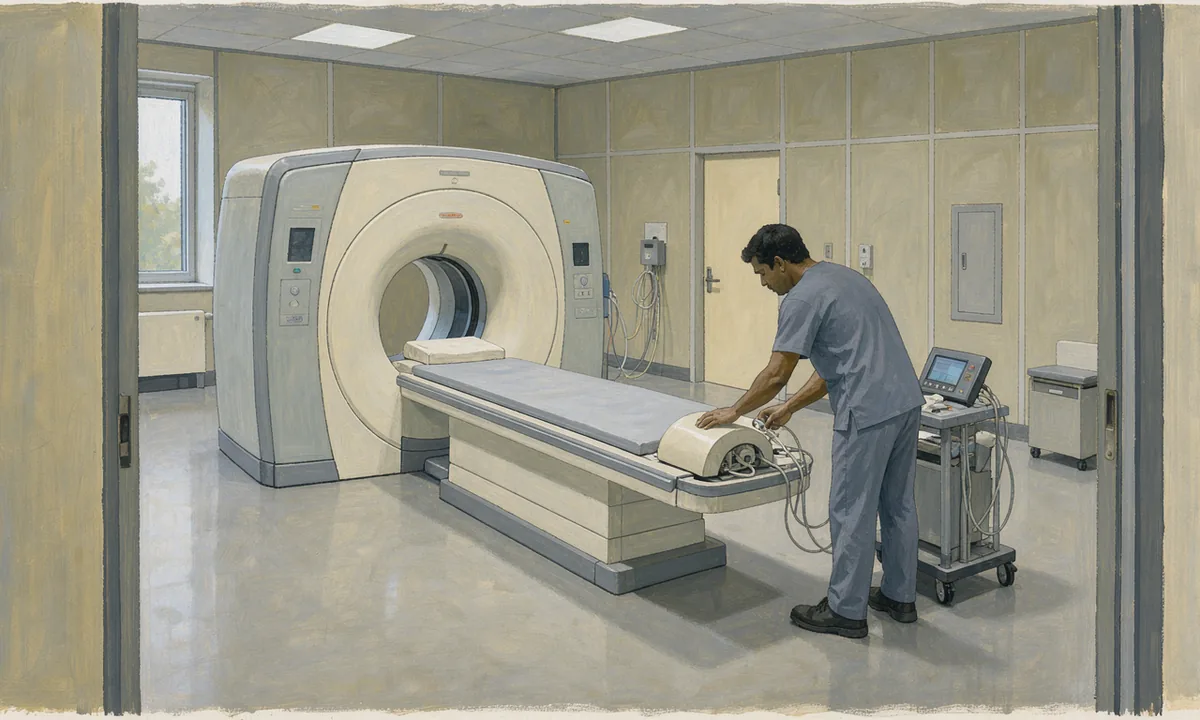
The study used phosphorus magnetic resonance spectroscopy, a scan that reads chemical signals without taking a tissue sample. It found increased cerebral NAD+ after oral NR in people with Parkinson’s disease. That is a striking measurement, and it explains why this research deserves attention beyond the supplement discussion.
Energy metabolism in brain cells
NAD+ supports cellular energy metabolism and enzymes involved in repair and signaling. Those roles provide the biological rationale for studying it in the brain. The cell’s supply is continually built, recycled and consumed.
CD38, an enzyme that consumes NAD+, gives this story an unexpected complication. Deleting CD38 in mice preserved NAD+ and improved mitochondrial function. The review of CD38 and immune metabolism also describes competition for NAD+ among enzymes. I hadn’t expected so many competing uses for the same molecule. The deletion finding remains a mouse result.
NADPARK in Parkinson’s disease
Participants in the NADPARK trial received 1000 mg/day of oral NR for 30 days or placebo. Cerebral NAD+ increased on spectroscopy, and the chemical mixture in cerebrospinal fluid changed in a direction consistent with enhanced mitochondrial function.
Clinical Parkinson’s scores showed a favorable trend. The scan result is clearer than the therapeutic conclusion: this phase I experiment did not establish disease improvement. A later trial could ask directly whether the cerebral change accompanies durable daily function.
What NAD+ didn't change on the memory test
The counterweight is just as important. In a randomized placebo-controlled trial in older adults with mild cognitive impairment, NR at 1 g/day for 10 weeks raised blood NAD+ 2.6-fold versus baseline and was well tolerated — but did not significantly improve performance on the Montreal Cognitive Assessment or related neurocognitive metrics [14] [GAP].
That gap also separates access from evidence: NAD+ is prescribed in the current practice of Promise Peptides (mypromise.com), where a licensed U.S. clinician must assess each person and may turn down the request. Only U.S. patients can use the service, whose options differ according to the state and the treatment sought. Its compounded NAD+ medicine has no FDA approval, and the prescription route does not turn the MCI result into a cognitive benefit.
The implication is pointed: NAD+ elevation alone may be insufficient for cognitive improvement in MCI. This is the central honest finding of the neuro module — the biomarker moved, the cognition score did not. Marketed "brain" claims tend to cite the first kind of result and omit the second.
The cognitive trial
The Orr trial in older adults with mild cognitive impairment gives the full cognitive result. I assign the unchanged scores the same importance as the biochemical rise.
NR-SAFE
The high-dose NR-SAFE trial tested 3000 mg/day for 30 days in people with Parkinson’s disease. It reported no moderate or severe adverse events and substantial augmentation of the NAD+ metabolome without methyl-donor depletion. Clinical disease severity did not significantly improve.
The safety endpoint and clinical severity result answer separate questions. Giving each its own space seems fairer to the experiment than treating a larger amount as evidence of a larger benefit.
The next brain question
The 2025 review describes sparse human tissue data and limited clinical efficacy. NADPARK’s direct cerebral measurement is valuable precisely because those measurements are uncommon. The MCI trial makes the next demand equally clear: cognitive improvement must be measured in its own right.
For me, the most compelling future result would join location and function: a chemical change in the relevant tissue alongside a sustained improvement that matters in daily life. The IV addiction reports involve another population and a different route; they need their own examination.